
Client
Private hospital foodservice operator
A web-based meal ordering and operations platform that turns patient preferences, room context, menu cycles, approvals, kitchen lists, chef tallies, labels, and display screens into one connected workflow.
The fast read on what the platform is, who it serves and what was delivered.
Client
Private hospital foodservice operator
Country
Australia
Year
2024
Platform
Web ordering + staff operations
Users
Patients, foodservice staff, and display viewers
Scope
Meals, bed lists, approvals, labels
Scope markers
The challenge was connecting patient choice to kitchen execution without exposing private hospital or patient information in the public case-study story.
Room details, texture, allergies, dietaries, dislikes, comments, serving size, and meal timing all needed to stay attached to the order.
Breakfast, lunch, dinner, alternatives, drinks, soups, desserts, vegetables, carbohydrates, and no-meal states needed staff-ready production views.
Out-of-window orders needed review before they moved into production so staff could manage exceptions without losing patient context.
The case study needed to show operational depth while avoiding real patient data, site names, staff details, hospital identifiers, and credential exposure.
Webits built a Django hospital foodservice platform with patient registration, meal ordering, room and dietary capture, bed list management, late-order approvals, meal production views, chef tallies, menu management, support enquiries, labels, PDFs, display screens, and spreadsheet-connected outputs.
Patient workflow
Patients can register or log in, review upcoming order dates, and place meals through a guided ordering flow.
The ordering path captures room context, texture, fluid texture, allergies, dietaries, dislikes, comments, serving size, and preference notes.
Kitchen operations
Staff can manage bed records, missing orders, trolley grouping, breakfast, lunch, dinner, and date-specific production screens.
The platform supports pending approval queues, chef tally aggregation, drink label output, and preparation-ready order context.
Operational outputs
Menus, weekly cycles, historical menu records, daily displays, and weekly display screens support patient-safe foodservice communication.
Print-friendly order views, menu PDFs, drink labels, and spreadsheet-connected preparation data support daily catering operations.
The platform turned a sensitive hospital foodservice workflow into one connected ordering and operations system, while keeping public claims deliberately general.
Patients can move through meal dates, preferences, and menu selections without staff collecting every request manually.
Texture, allergies, dietaries, room status, dislikes, comments, and serving size travel with the order into staff workflows.
Bed lists, production screens, breakfast, lunch, dinner, trolley grouping, and tallies turn patient selections into preparation context.
Pending approval states give staff a controlled way to handle out-of-window submissions before they affect production.
PDFs, labels, display menus, and spreadsheet-connected data are generated from the same records used for ordering and review.
The case study can show the operational depth of the platform without exposing patient data, hospital identity, or sensitive implementation details.
The clearest screens, system states, and support visuals behind the work.
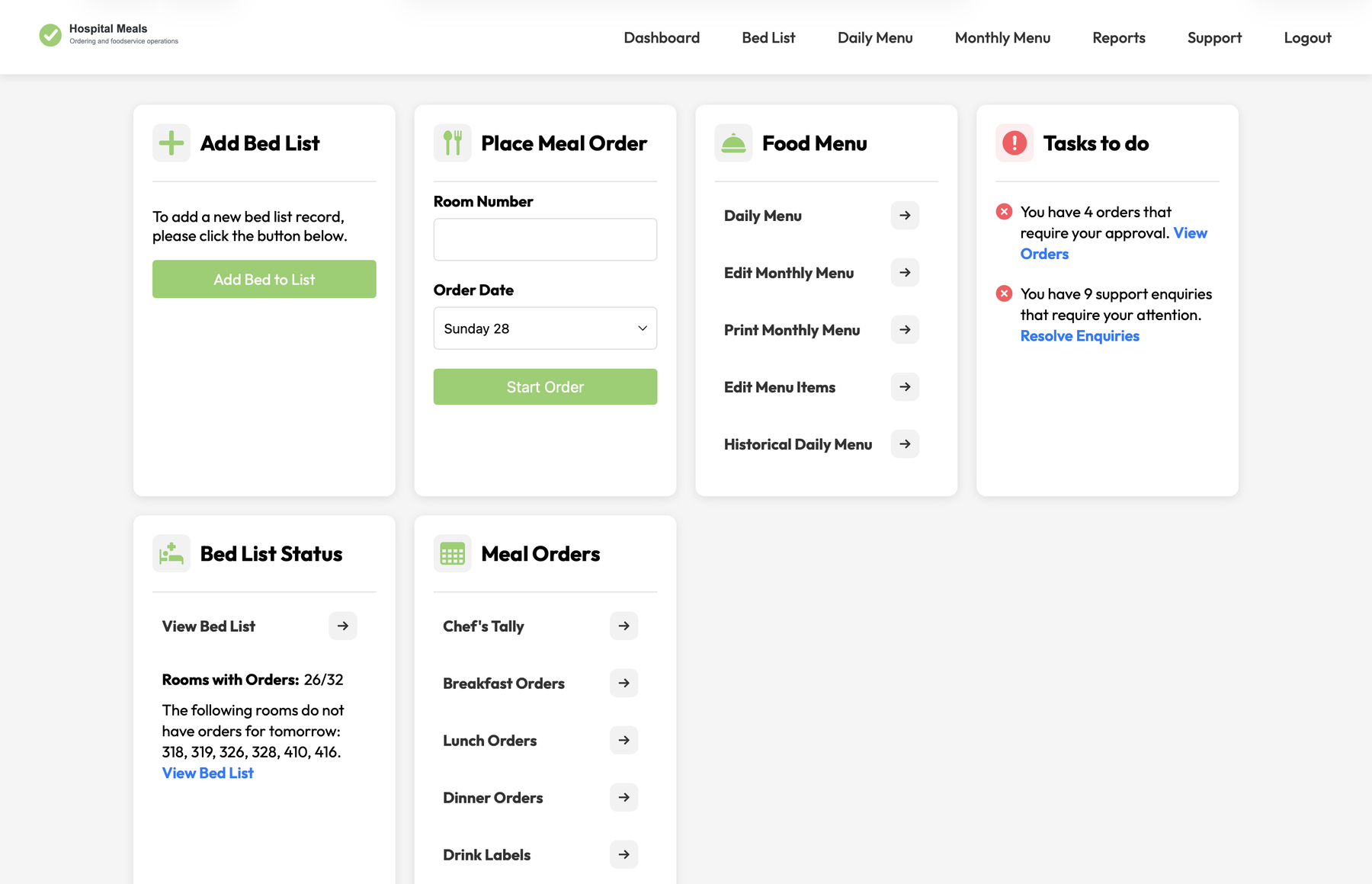
Operations dashboard
Bed list operations
Breakfast production table
Lunch production table
Dinner production table
Chef tally
Pending approval queue
Support enquiry management
Menu item library
Menu item editor
Weekly menu editor
Weekly menu view
Daily menu view
Historical menu records
Drink labels
Bed-list logs
Patient dashboard
Patient profile
Patient information step
Breakfast order step
Lunch order step
Dinner order step
Order confirmation
My orders
Patient order detail
Daily display menu
Weekly display menu
Public entry screen
Webits builds practical systems for complex operations where roles, approvals, records, outputs, and public-safe handling all need to be considered from the start.