
Client
Developer Free Living
Developer Free Living was built to reduce the traditional developer-cost layer by turning a fragmented, multi-party development process into one connected operating system. Webits delivered the platform end-to-end across feasibility, stakeholder procurement, buyer access, finance, delivery, completion, and governance.
The fast read on what the platform is, who it serves and what was delivered.
Client
Developer Free Living
Country
Australia
Year
2026
Platform
Web-based property operating system
Users
Buyers, stakeholders, admins, and finance partners
Scope
Feasibility, bids, buyer access, delivery governance
Scope markers
The challenge was turning a five-year industry vision into a product that could coordinate real stakeholders, real decisions, and real project stages.
The platform had to carry feasibility, stakeholder procurement, buyer interest, finance, delivery, completion, and governance as one operating model.
Agents, builders, managers, architects, banks, solicitors, strata participants, buyers, and admins all needed role-specific workflows without fragmenting the project record.
Property applications, info-kit requests, investment visibility, bank-linked loan submissions, and project access needed to remain tied to the same development context.
AI-assisted feasibility had to return usable benchmark ranges and project context inside a controlled workflow rather than free-form advice.
Webits built a Django property platform with public project surfaces, buyer workflows, stakeholder dashboards, bidding, AI-assisted feasibility, finance pathways, document handling, milestones, handover, notifications, and governance controls.
Public and buyer access
Public project, property, stakeholder, and unit surfaces explain the development model while giving buyers a structured entry point.
Buyers can request information, submit property applications, track investment context, and move into bank-linked finance workflows.
Stakeholder operations
Professional stakeholders can maintain profiles, review opportunities, submit bids, and become part of an approved project team.
Accepted stakeholders can work from project dashboards, milestone views, documents, notifications, and role-specific delivery surfaces.
Governance
Project files, delivery milestones, progress logs, completion checks, and handover review keep governance close to the work.
The system supports strata participation, voting context, completion approvals, and stakeholder review as part of the wider platform.
The build turned a broad property-development concept into a working operating system with clear paths for buyers, stakeholders, admins, and finance partners.
Feasibility, stakeholders, buyers, finance, delivery, documents, handover, and governance now sit inside one structured product.
Professional roles can be profiled, invited into opportunities, selected through bids, and connected to project delivery work.
Project discovery, unit interest, property applications, info kits, investments, and loan submissions now have a clearer operating structure.
AI-assisted benchmark generation gives the platform a controlled way to support early feasibility thinking without replacing human judgement.
Milestones, logs, files, notifications, and handover records give stakeholders a more connected view of project progress.
Completion review, stakeholder approval, strata participation, and voting logic give the product more depth than a listing or CRM tool.
The Django foundation gives Developer Free Living a serious base for client testing, pre-launch preparation, and future workflow changes.
The clearest screens, system states, and support visuals behind the work.
Homepage hero
Participant fit and execution context
Project lifecycle model
At-cost comparison model
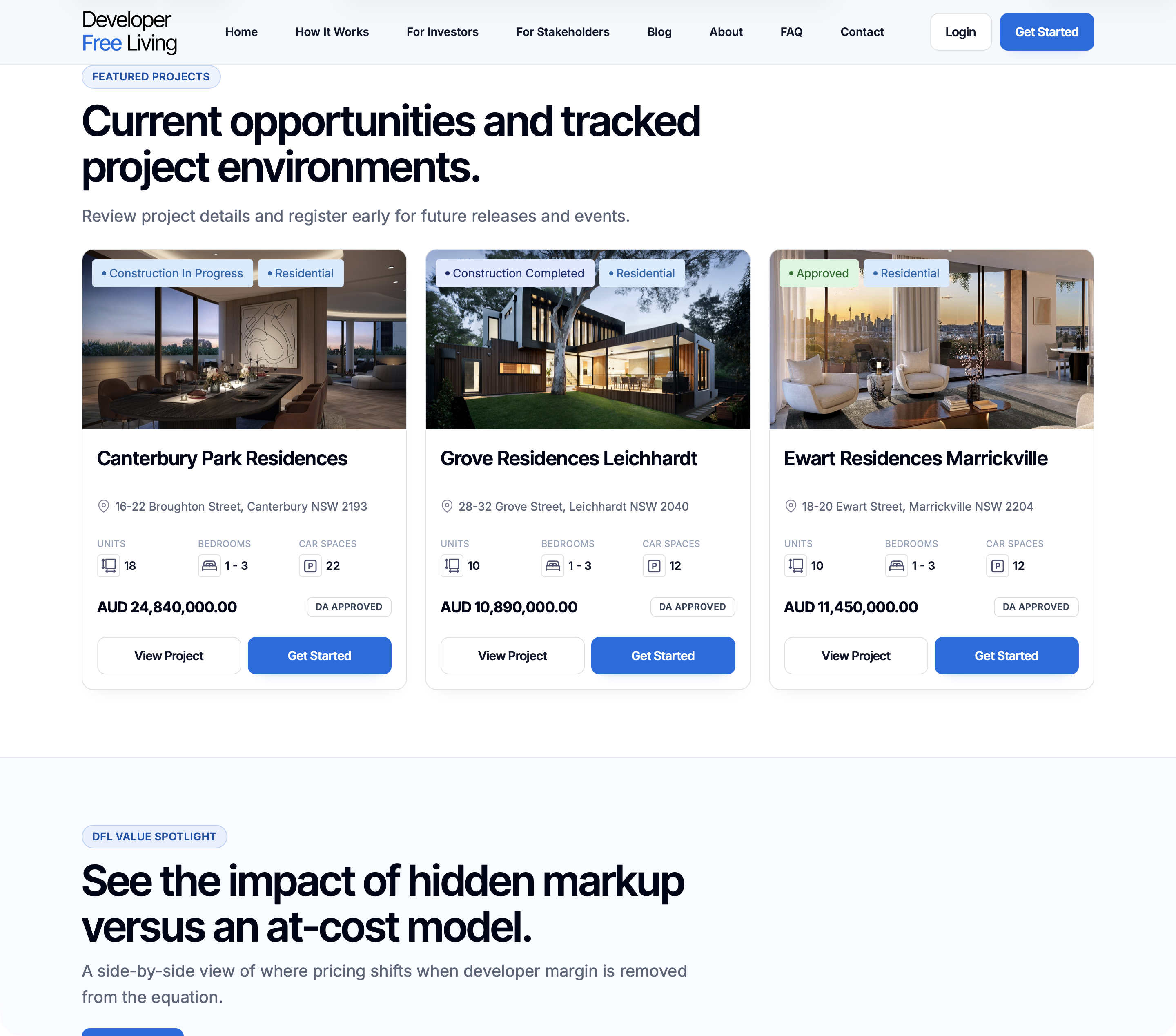
Current opportunities
Stakeholder ecosystem
For investors overview
Finance pathway
For stakeholders overview
Stakeholder workflow
Real estate agent pathway
Bank pathway
Register-interest hero
Register-interest form section
Role selection
Registration entry
Canterbury Park Residences
Approved stakeholders
Canterbury project units
Unit 902 overview
About page
Blog and market guidance
Admin dashboard overview
All listing control
Feasibility report overview
Feasibility financial analysis
Listing bid oversight
Property applications control
Buyer dashboard overview
Buyer projects
Buyer investment list
Buyer loan applications
Buyer property application
Buyer kit requests
Stakeholder dashboard overview
Stakeholder my projects
Submit bid workflow
My bids workspace
Project delivery workspace
Milestone management
Project files workspace
Handover checklist
Project detail overview
Project pricing and team context
Unit detail overview
Unit finance breakdown
Platform notifications
Shared documents
More Webits work across websites, mobile products, portals and operational systems.
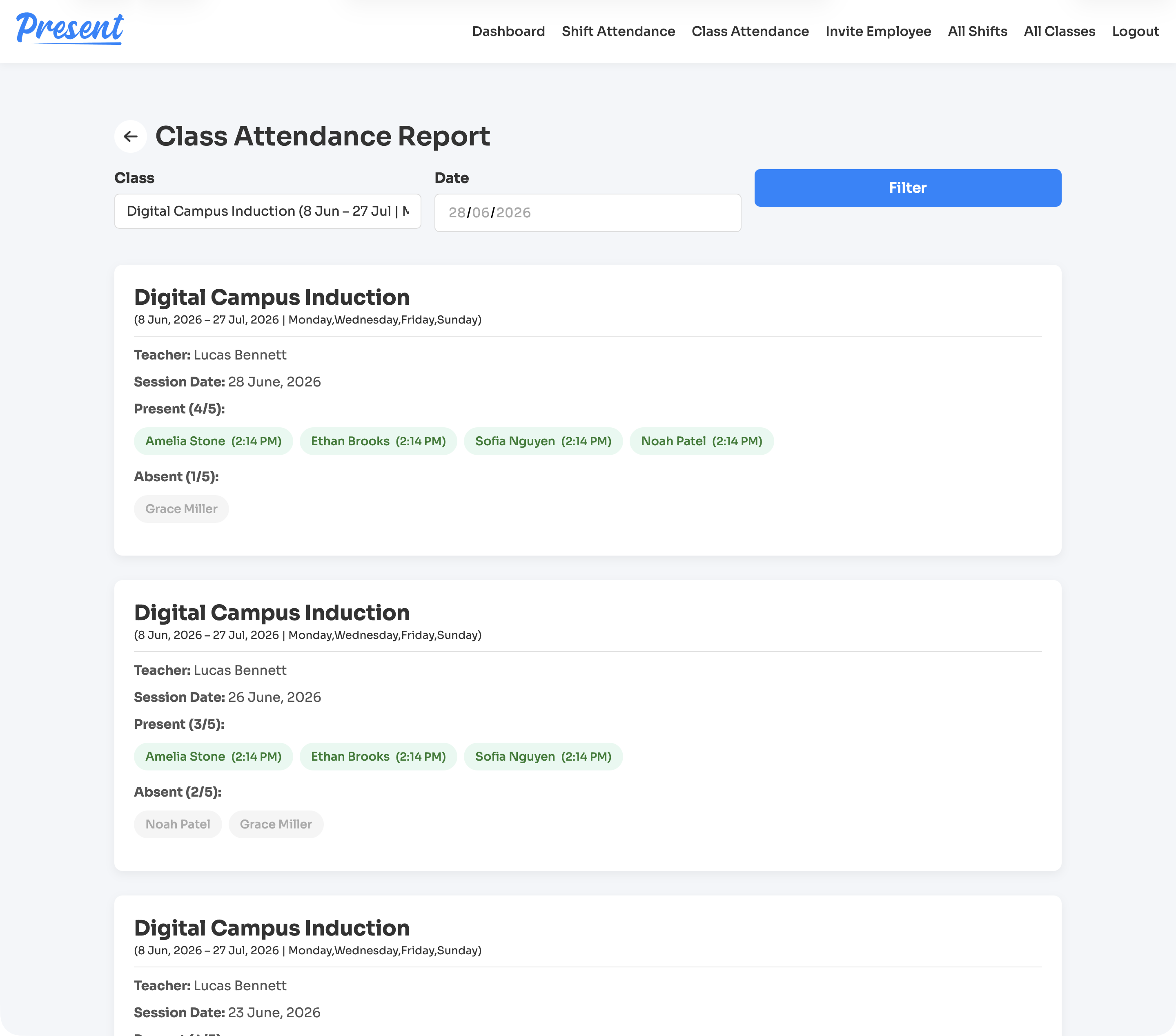
A web and iOS attendance platform for education providers, covering class rolls, staff shifts, geofenced clock-ins, cancellations, reports, notifications, and role-based admin control.
View case study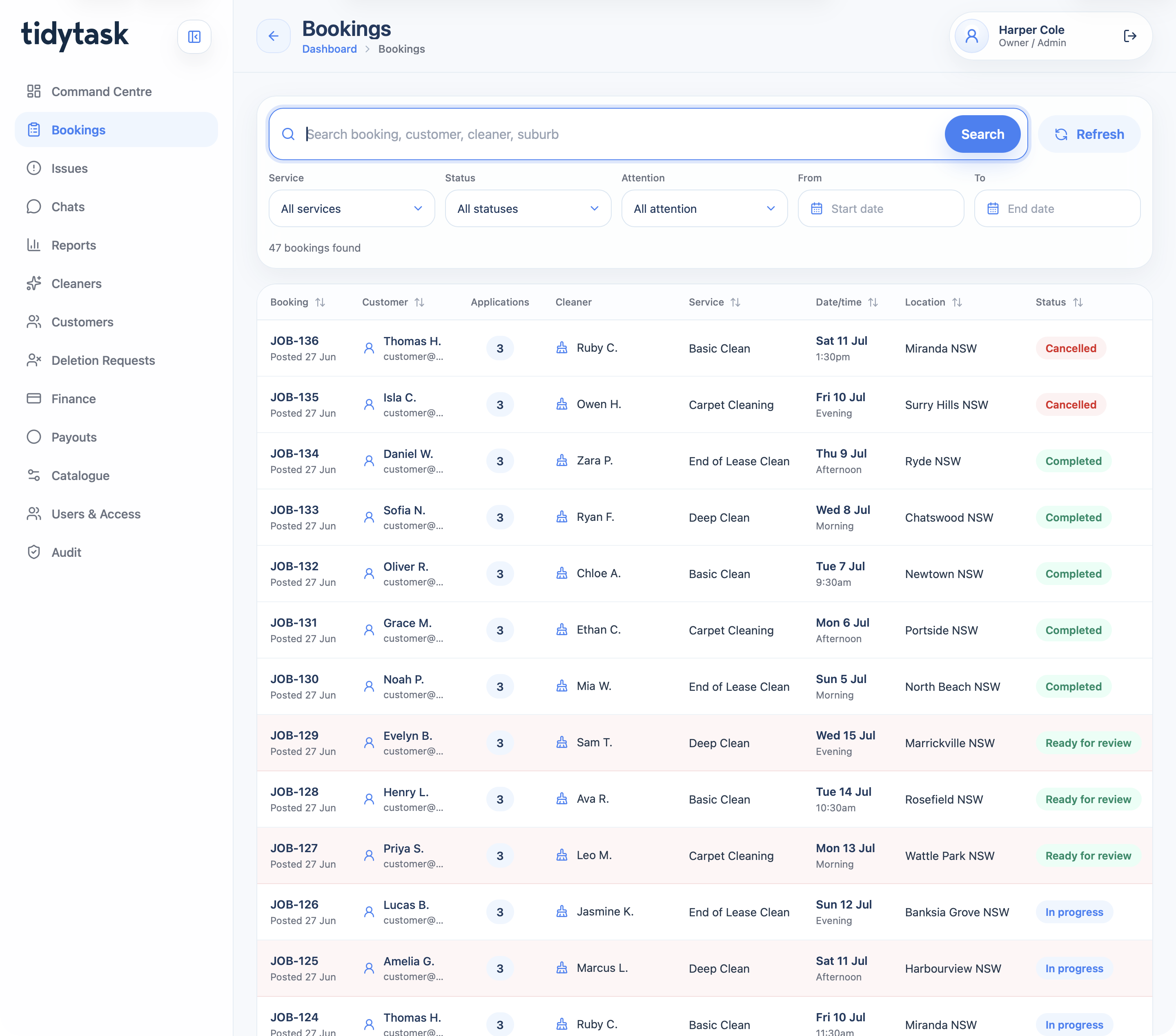
A cleaning marketplace and operations platform for customer booking, cleaner applications, payments, GPS proof, support, finance, payouts, reporting, and admin control.
View case study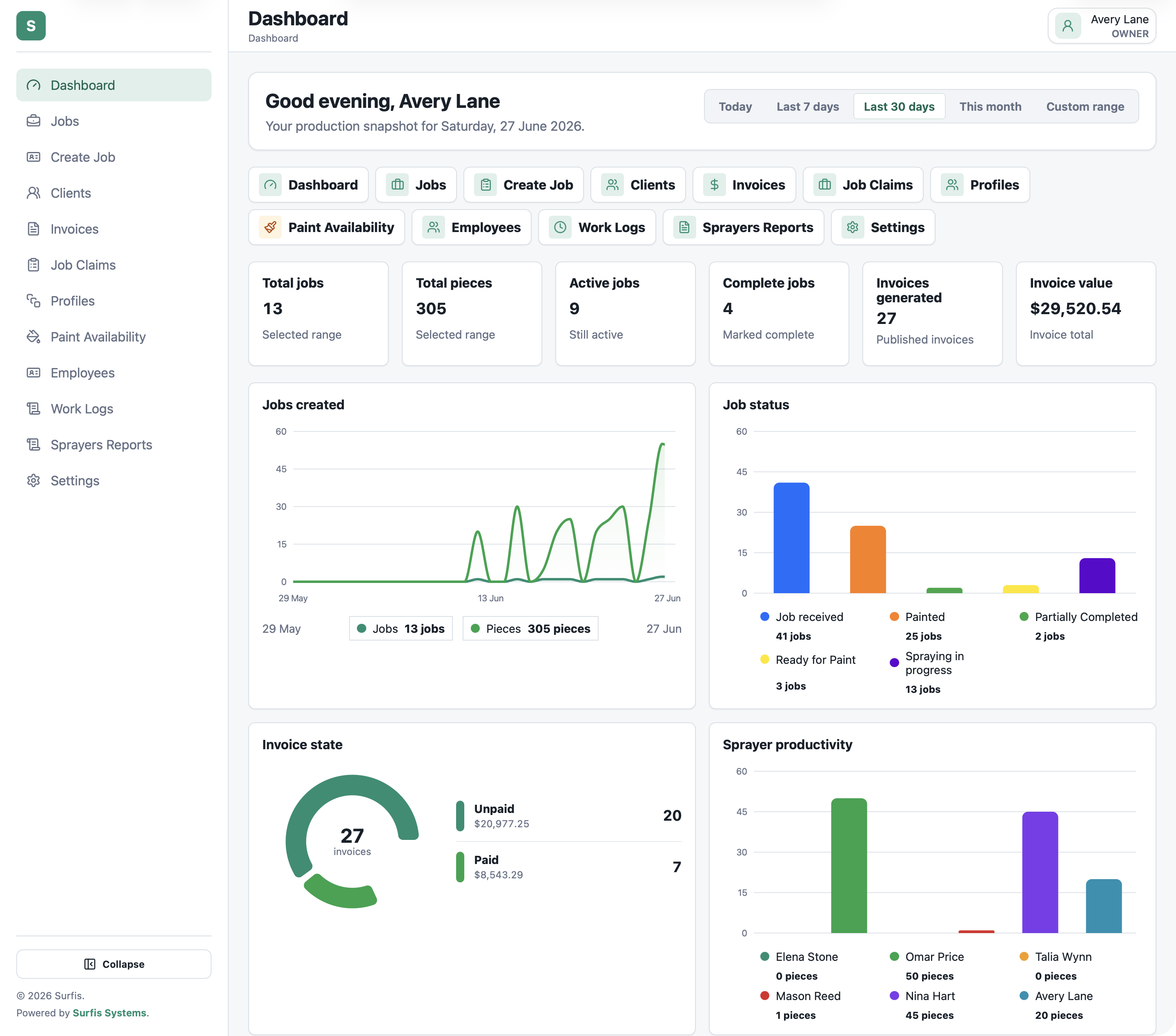
A production platform for spray finishing teams, covering jobs, pieces, paint, labels, costing, invoices, MYOB, and reporting from one system.
View case studyWebits builds serious custom systems for businesses that need software to coordinate people, data, documents, decisions, and workflow across more than one role.